
Bulk Calendar Invite in Outlook and O356
Are you trying to send bulk calendar invite in outlook for webinars, events, conferences, or team meetings? If yes, you know how slow it feels to add emails one by one. Manual scheduling can quickly become frustrating and tiring.
Today, time is very valuable. But many people still send meeting requests one at a time in Outlook. This wastes time and increases the chance of mistakes.
This guide shows easy ways to send bulk calendar invite in outlook and bulk calendar invites in o365. It explains the tools people already use and how you can use them to invite many people in just a few simple steps.

Using Outlook for Bulk Calendar Invites
Outlook is a powerful tool for daily meetings and team communication. Many people already use it every day for emails and calendar scheduling.
When meetings become larger, like webinars, training sessions, or company-wide events, sending a bulk calendar invite in o365 needs a slightly different approach. Instead of simple one-on-one invites, you may need methods that help you reach many people at once.
That’s why many Outlook users look for better ways to send bulk calendar invite in outlook. Using the right method helps you save time. It keeps things organized, too. Plus, everyone gets the invite easily.
Traditional Ways in Outlook
Outlook is one of the first apps people use to send bulk calendar invites. But Outlook can be hard for new users because there are many buttons and menus. Most people use Outlook in offices, so they slowly learn how it works.
Outlook is good for small groups and daily meetings. But when the number of guests becomes very big, it gets slow and confusing. Adding many emails and sending invites takes a lot of time.
Below are the simple ways to send bulk calendar invitations using Outlook:
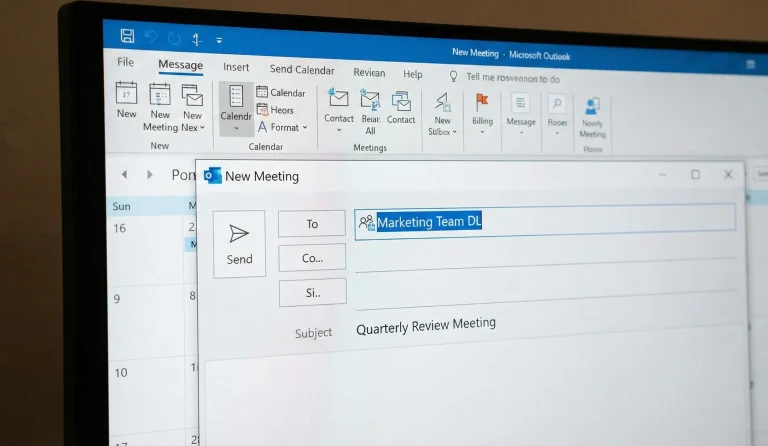
1. Using Distribution Lists / Contact Groups:
This is one of the most common ways people try to send bulk calendar invite in outlook. Many office users already use Contact Groups, so this feels like a simple and familiar option.
Instead of typing many email addresses every time, you create a group name and add all your team members to it. Then, when you create a meeting, you type the group name. Outlook sends the invite to everyone in that group.
This method works well for small office teams and weekly meetings. It can help you save some typing time. But when the group gets big, or you invite outsiders, this method can slow down and become tough to manage.
Sending a bulk calendar invite in outlook is possible using this method, but it requires manual setup. This can lead to issues as your list expands.
The steps:
- Go to People > New Contact Group.
- Add members from your address book or a file.
- Create a new meeting and enter the Group Name in the “To” field.
Pros:
- Meeting invitations typically have high deliverability within the same company.
- Easy to reuse for weekly meetings.
- Good for people who are used to working around Microsoft Office products.
Cons:
- No personalization in the calendar.
- Uncontrolled “Reply All” storms in email can quickly become a nightmare.
- It can be difficult to manage for external recipients.
- Outlook has a complex user interface, which can be confusing.
- Other attendees can view the names of all the guests.
2. Using Mail Merge (Word + Outlook):
Many people seek better ways to send bulk calendar invite in outlook. Contact Groups often cause issues. That is when they try to use Microsoft Word together with Outlook.
This method lets you send many meeting emails using a list from Word. It feels more advanced and gives you a little more control than Contact Groups. Some people use this to avoid big Reply All email chains and to keep emails more private.
However, this setup is not simple. You have to use both Word and Outlook together, and it takes time to learn. For large lists, it becomes slow and confusing. Even though this method can help with bulk calendar invites in o365, it still requires many manual steps and technical knowledge.
So this method can work, but it is not easy for most people and is not built for large events.
The steps:
- Open a new email or calendar invite and click the New Calendar Poll button in the ribbon.
- Select several time slots from your calendar that you are willing to host.
- Enter your list of recipients and send the poll.
- Once a consensus is reached, the poll can automatically send a final calendar invite to all participants.
Pros:
- Let recipients choose the meeting time instead of forcing one.
- Automatically holds your calendar to prevent double-booking during voting.
- Delivers the final invite once the preferred time is selected.
- Similar to the Google spreadsheet method.
Cons:
- External users often struggle with logging in and a poor voting experience.
- With 50+ attendees, agreeing on a time is nearly impossible.
- Limited customization makes these polls unsuitable for crucial corporate needs.
- Both parties receive excessive automated change-notification emails.
- Compatible calendar systems are rarely used in large, diverse lists.
3. Using Excel + Copy-Paste (Manual Bulk Add):
This is one of the most basic ways people try to send bulk calendar invite in outlook. Many teams already store email lists in Excel, so copying and pasting feels like the fastest option.
You simply copy a long list of email addresses from Excel and paste them into the meeting invite in Outlook. At first, this seems quick and easy, especially for small lists.
But as the list grows, this method becomes risky and time-consuming. Outlook may block large lists. Emails might be pasted incorrectly. Privacy issues can also arise. This method works, but it needs a lot of manual checking.
So while this is a possible way to send bulk calendar invites in o365, it is not safe or scalable.
The Steps:
-
Open your Excel file that contains all email addresses.
-
Copy the complete list of email addresses from Excel.
-
Paste the emails into the Outlook meeting guest field.
-
Send the meeting invite to all added email addresses.
Pros:
- No extra tools are needed to use this method.
- It is easy to use for very small email lists.
- It works well if emails are already stored in Excel.
Cons:
- Outlook may limit or block very large guest lists.
- It is easy to make typing or pasting mistakes.
- There is no way to personalise each calendar invite.
- Guest email addresses may be visible to other guests.
- This method is not suitable for large events or webinars.
4. Using Outlook Distribution Groups (Office 365 Admin Method):
In Office 365, companies can create official Distribution Groups using the admin panel. This is another way people try to manage bulk calendar invite in outlook for large internal teams.
These groups are controlled by IT or system admins. Once created, employees can use the group email to invite many people at once. This helps for company-wide or department meetings.
This method works well inside one company. But it is not flexible. Normal users cannot easily create or change these groups. It also does not work well for outside guests.
So while this is a valid way to send bulk calendar invites in o365, it is slow to set up and limited in real-world use.
The Steps:
-
Admin creates a Distribution Group in the Office 365 Admin Centre.
-
Team members are added to the group by the admin.
-
User enters the group email in the Outlook meeting invite.
-
Outlook sends meeting invites to all group members automatically.
Pros:
-
- This works well for large internal company teams and departments.
- IT teams manage groups for better control and security.
- Delivery rates are high for internal company email systems.
Cons:
- Normal users cannot create or manage these distribution groups.
- This method is not good for inviting external guests.
- There is no way to personalise calendar invites.
- Group setup and changes can take extra time.
5. Using Shared Mailbox or Shared Calendar:
Some teams use a shared mailbox or shared calendar to handle group scheduling. This is common in HR, training, and support teams.
With this method, one shared account sends meeting invites to many people. This helps teams work together and keeps meetings in one shared place.
Yet, this does not truly solve the bulk calendar invite in outlook problems. You still have to manually add email addresses. It also has the same limits and privacy issues.
This works for small team use, but it becomes hard to manage for large bulk calendar invites in o365.
The Steps:
-
Open the shared mailbox or shared team calendar account.
-
Create a new meeting from the shared calendar interface.
-
Manually add all guest email addresses to the meeting.
-
Send the meeting invite from the shared team account.
Pros:
-
- This works well for team-managed meetings and shared responsibilities.
- It keeps all meetings centralised in one shared calendar location.
- This is useful for internal teams managing recurring meetings.
Cons:
- Guest email addresses still must be added manually.
- The same Outlook guest limits still apply here.
- There is no option for personalized invites.
- This method is hard to scale for very large lists.
6. Using Third-Party Add-ins for Outlook (O365 Plugins):
Some users try Outlook add-ins to help with bulk calendar invite in outlook. These add-ins connect Outlook with Excel files or contact lists.
This sounds helpful, and for small use cases, it can save some time. Many people install these tools to reduce manual work.
But most add-ins are still limited by Outlook rules. They often require setup, paid plans, and technical steps. They are not built for very large events.
Add-ins can help a bit, but they aren’t a full solution for serious bulk calendar invites in o365.
The Steps:
-
Install an Outlook add-in from the Microsoft add-ins store.
-
Connect your Excel file or contact list to the add-in.
-
Create a new meeting directly inside the Outlook calendar.
-
Use the add-in tool to send meeting invites automatically.
Pros:
-
- This reduces some manual copying and pasting work.
- It works directly inside the Outlook email and calendar app.
- Some tools may support importing contacts from Excel files.
Cons:
-
- Many Outlook add-ins require paid subscriptions to use.
- Initial setup can be confusing for non-technical users.
- Outlook sending rules and limits still apply here.
- This method is not ideal for large public events.
Why Outlook Methods Become Hard at Scale
All these methods show that it is possible to send bulk calendar invite in outlook and o365. But they all require manual work, setup time, and constant fixing of limits and errors.
As your guest list grows, these methods become harder, slower, and more stressful. Many teams choose tools made for bulk calendar invites. They do this instead of making Outlook handle tasks it wasn’t built for.
This is why many teams move to tools built specially for bulk calendar invites. These tools are made to handle large lists easily, instead of forcing Outlook to do jobs it was not designed for.
Stop Struggling with Outlook - Use BulkCalendar
To bypass these limits, you need a purpose-built tool like BulkCalendar. It serves as a link between your spreadsheet and attendees’ calendars. This ensures every invite reaches them without risking their privacy.
BulkCalendar is the most professional, time-saving, and effective way to send bulk meeting invites in 2026. It clears away the tech issues of guest limits and privacy leaks. This lets you focus on your event instead of worrying about manual data entry.
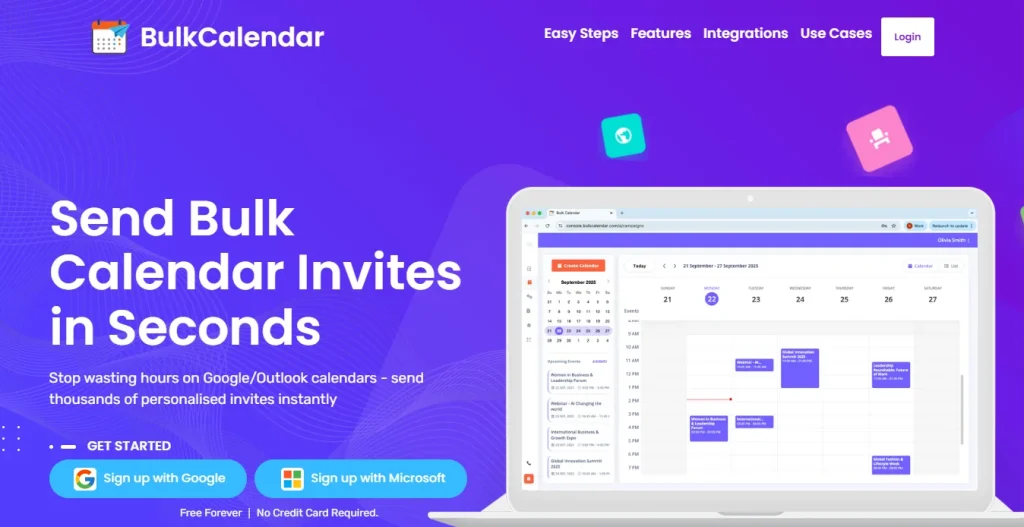
3 Easy Steps
Save hours of manual work – in just 3 simple steps, you can personalize every invite and send bulk meeting invites directly from your own email and domain
Create Calendar
Add a Personal Touch, Use First Names or Any Data You Choose
Import Guests
Copy-paste thousands of emails, or upload a CSV or Excel file
Send
Send securely from your own email or domain
Purpose-Built Tool That Saves You Hours
BulkCalendar makes sending, personalizing, and managing large calendar invites effortless - so you can focus on running your events, not fighting your calendar.
Mass Invites in Seconds
Send thousands of invites at once without guest limits or repetitive clicks.
Personalized for Every Guest
Add names, custom notes, and details so every invite feels personal and engaging.

Works with Every Calendar
Send calendar invites that work seamlessly across all major apps - Google, Outlook, Apple, Yahoo, and more. So your attendees never miss an event.




Conclusion
Manual scheduling can take up a lot of your time. When you send calendar invites one by one in Outlook, managing large guest lists becomes slow and tiring. There is a smarter way to handle big meetings and events.
The bottom line is simple: your time is important. Scheduling should be easy, not stressful. You can invite hundreds or thousands of people with a simple 3-step process. This way, you’ll stay organised and keep everything private.
Want to see how it works? Join many professionals who have made bulk calendar invites in Outlook simple and fast.
Free Forever | No Credit Card Required