
Bulk Calendar Invites in Google and Gmail
Sending bulk calendar invites in google is common. Teams, schools, trainers, and event organizers often use this feature. Since Google Calendar and Gmail are easy to use, most people start with them for meetings and events.
For small groups, Google works well. When the guest list is large, sending bulk calendar invites in google or gmail takes time and effort.
Google tools work well for team meetings but not for large public events, webinars, or big guest lists.
Here are the most common ways to send bulk calendar invites in google and bulk calendar invite in gmail. We’ll also explain why these methods can become tricky as you try to scale.

Using Google and Gmail for Bulk Calendar Invites
Google and Gmail are popular tools for daily emails and meetings. Many people already use them every day to plan and join meetings.
When your meetings get bigger, like webinars or training sessions, you need a new way. Sending bulk calendar invites in google will change. Simple one-by-one invites are not enough when you have a long guest list.
That is why many users look for better ways to send a bulk calendar invite in gmail and Google Calendar. Using the right method helps you save time. It keeps you organized, too. Plus, it ensures everyone gets the invite without issues.
Traditional Ways in Google
1. Using Google Groups (Best Native Google Method)
This is the most official way to send bulk calendar invites in google using built-in Google tools. Google Groups lets you create one email address that represents many people.
You create a group, add many members, and then invite the group email to your Google Calendar event. Google sends the invite to everyone in that group.
This works well for company teams, school classes, or internal departments. But for large events or outside guests, it becomes harder to manage. Groups need setup, permissions, and ongoing maintenance.
This method is great for sending bulk calendar invites in google. Yet, it remains manual and isn’t flexible for large or public lists.
The steps:
- Create a new Google Group first.
- Add all members to the group.
- Create a new Google Calendar event.
- Invite the group email address.
Pros:
- This works well for internal teams.
- It is easy to invite many people.
- The group address can be reused.
Cons:
- Setup can take extra time.
- It is not good for external guests.
- Reply All emails can cause problems.
- Large or changing lists are hard.
2. Using Google Calendar Guest Field (Manual Add)
This is the most basic way people try to send bulk calendar invites in google. Users manually type or paste many email addresses into the guest field.
For small lists, this works fine. Many people take emails from a document or spreadsheet and put them into Google Calendar.
But Google Calendar has guest limits. When the list grows, this method becomes slow, risky, and unreliable. It is easy to miss emails or hit system limits.
So while this is a simple way to send a bulk calendar invite in gmail, it does not scale well for large events.
The steps:
- Create a new Google Calendar event.
- Paste many email addresses into Guests.
- Save the event and send invites.
Pros:
- No special setup is needed.
- It is fast for very small lists.
- It works well for quick meetings.
Cons:
- Guest limits can block large sends.
- It is easy to make mistakes.
- There is no invite personalization.
- It is not good for large lists.
3. Using Calendar Event Links (Public Add-to-Calendar Links)
This method is very popular for webinars and big public events. Instead of sending a real calendar invite to each person, the organizer shares a Google Calendar event link.
People click this link and add the event to their own calendar by themselves. This makes it easy to invite a very large number of people at one time. It also helps avoid limits on how many guests you can add.
However, this method also has some problems. Because people add the event on their own, the organizer cannot fully control who joins. It is also hard to know exactly who added the event to their calendar.
This is why many people use this way for sending bulk calendar invites in google to big or public groups. It works for sharing event details, but it is not a real calendar invite system. You cannot easily track attendance or see a clear guest list.
This method is quick and easy. However, it isn’t ideal for tracking, control, or detailed guest information.
The Steps:
- Create a new Google Calendar event.
- Generate and copy the event link.
- Send the link using email tools.
Pros:
- There are no direct guest limits.
- This works well for public events.
- The link is easy to share.
Cons:
- There is no RSVP tracking.
- Guests may not add an event.
- There is no personalization option.
- Attendance is hard to manage.
4. Using Gmail to Create Calendar Events from Emails
Gmail lets users create Google Calendar events directly from their emails. This is helpful when people are talking about a meeting in an email and want to quickly add it to their calendar.
With just a few clicks, users can turn an email into a calendar event. They can also add a few guests to that event. This makes it easy to plan small meetings without leaving Gmail.
This method works well for small team meetings or quick one-time scheduling. It saves time and keeps everything organized in one place.
But this feature is not made for bulk calendar invites in google. It is not designed to invite large lists of people at once. It works best for a few people, not for hundreds or thousands.
This is great for daily office work. But it doesn’t help with sending bulk calendar invites for big events, webinars, or public meetings.
The Steps:
- Open the email inside Gmail.
- Click to set up a meeting time.
- Create a new calendar event.
- Add guests to the event manually.
Pros:
- This is easy for small meetings.
- It works well for email planning.
- It is fast for small teams.
Cons:
- Guests must be added manually.
- It is not for large lists.
- There is no bulk automation.
5. Using Google Calendar API (Technical Method)
Some technical teams use the Google Calendar API to send or manage calendar invites in bulk. This means they use special software tools and code to connect with Google Calendar.
This method can be very powerful. It can automatically send many calendar invites at one time. It is useful for companies that have their own developers and technical teams.
Yet, this method is not easy for normal users. It needs programming skills, setup work, and special login permissions. It also needs regular updates and technical support to keep everything working.
So while this method can automate bulk calendar invites in google, it is complex and hard to use. It is not a simple or user-friendly solution for most people or small teams.
The Steps:
- Set up Google Calendar API access.
- Write scripts to create events.
- Add attendees using programmed scripts.
Pros:
- It offers a high level of automation.
- It works well for technical teams.
- It can scale for large systems.
Cons:
- It requires coding knowledge.
- Setup is complex and time-consuming.
- It is not for non-technical users.
- It needs ongoing technical maintenance.
6. Using CRM or Email Tools Connected to Google Calendar
Some businesses connect Google Calendar with CRM systems or email tools. These tools can sync contact lists and send calendar invites using special integrations.
This helps reduce some manual work. The system can automatically pull contacts and send invites. You don’t have to add people one by one.
However, setting up these tools can be confusing and take time. Many of these tools also still face Google’s guest limits. This means they may not work well for very large groups.
So while this method can help with bulk calendar invites in google, it can be expensive and hard to manage. It is also not the best choice for big public events or very large invite lists.
The Steps:
- Connect your CRM to Google Calendar.
- Select or upload your contact list.
- Create the event and send invites.
Pros:
- It offers some basic automation.
- It uses your existing contact lists.
Cons:
- Setup can be complex and confusing.
- Many tools require paid subscriptions.
- Google limits can still apply.
- This method is not ideal for large public events.
Why Google Methods Become Hard at Scale
All these methods show that it is possible to send bulk calendar invites in google and Gmail. But Google’s tools are mainly made for small teams and simple internal meetings.
When your invite list is small, these tools can work fine. But as your list becomes bigger, things start to get harder. You may face guest limits, more setup steps, and more manual work.
Sending invites one by one can be slow. Managing links and handling tech tools adds stress. It also becomes harder to track who joined and who did not.
This is why Google methods are not ideal for large events, webinars, or public meetings. They were not built to handle big invite lists with full control and easy tracking.
The Simplest Way - BulkCalendar
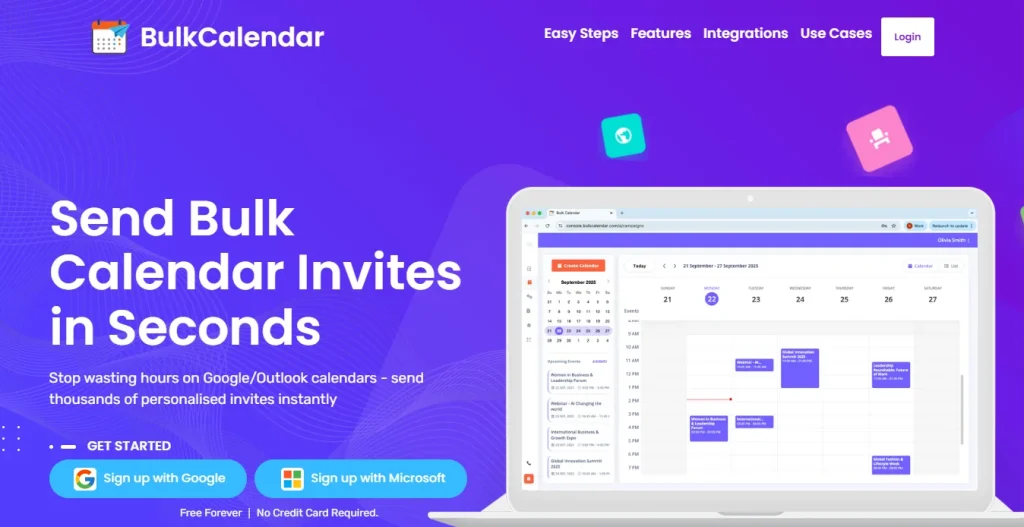
To avoid these problems, you need a tool made specially for this work, like BulkCalendar. It connects your email list or spreadsheet directly with people’s calendars. This helps every invite reach the guests safely without showing their private emails.
BulkCalendar is a simple and fast way to send bulk calendar invites in 2026. It removes problems like guest limits and privacy risks. This way, you can focus on planning your event instead of spending time on manual work.
3 Easy Steps
Save hours of manual work – in just 3 simple steps, you can personalize every invite and send bulk meeting invites directly from your own email and domain
Create Calendar
Add a Personal Touch, Use First Names or Any Data You Choose
Import Guests
Copy-paste thousands of emails, or upload a CSV or Excel file
Send
Send securely from your own email or domain
Purpose-Built Tool That Saves You Hours
BulkCalendar makes sending, personalizing, and managing large calendar invites effortless - so you can focus on running your events, not fighting your calendar.
Mass Invites in Seconds
Send thousands of invites at once without guest limits or repetitive clicks.
Personalized for Every Guest
Add names, custom notes, and details so every invite feels personal and engaging.
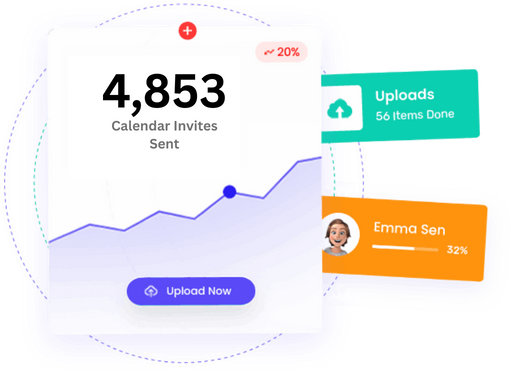
Works with Every Calendar
Send calendar invites that work seamlessly across all major apps - Google, Outlook, Apple, Yahoo, and more. So your attendees never miss an event.




Conclusion
Sending calendar invites by hand takes a lot of time. Google has guest limits, and other tools can cause privacy problems. But there is an easier way to manage your invites and guest lists.
Your time is important. You should not have to type email addresses again and again. Scheduling should be simple, not stressful. With a simple process, you can invite many people safely and without extra work.
Want to make scheduling easier? Many professionals have already switched to a simpler way to send calendar invites.
Free Forever | No Credit Card Required