

Send Bulk Meeting Invites in 2026 - Easy Steps
Trying to send bulk meeting invites for Webinars, Events, Conferences or meetings? Manual scheduling can be a real pain.
In the digital age, time is our most precious resource. However, most people still try to send meeting requests one at a time.
This guide shares simple methods to send bulk meeting invites, and if you specifically need to send bulk meeting invites step-by-step, we have covered that in detail as well. It covers all the existing tools and shows how you can leverage them to send a large number of meeting invites in minutes with Easy Steps.
Sending Bulk Meeting Invites Using Popular Platforms
Here are the steps you should follow to send bulk calendar invites on popular platforms :
- Collect all guest email addresses in one file or list.
- Upload the list into the calendar or email tool you are using.
- Add the meeting details like title, date, time, and meeting link.
- Review everything once and send the invite to all recipients at the same time.
Let’s explore all the possible ways you can send bulk meeting invites across popular platforms.
Hard Ways:
1. Google Calendar
Google Calendar is the most popular feature-rich, but it has some “hidden” limits that surprise users when you actually needs it. While the tool offers many useful features, it demands excessive time for adding guests one by one that should be automated. Google Calendar provides a good working ecosystem, but it lacks due to its hidden limitations.
Here are all the ways to send meeting invites using Google Calendar:
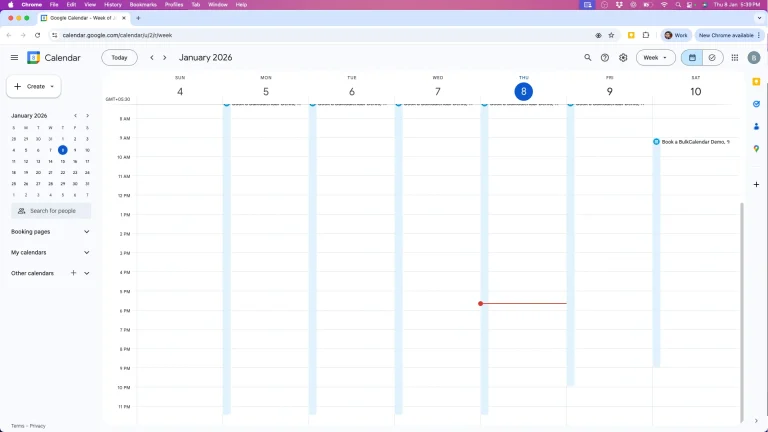
A. Using Google Groups (Best for Internal Teams):
Instead of adding 500 individual email addresses one by one. You first create a single email group that contains all 500 people.
This group is given one common email address, such as [email protected]. Now, when you add this one group email to the calendar invite. Everyone in the group automatically receives the invitation. You don’t need to manage or update 500 separate emails. Adding or removing people becomes easy – just update the group.
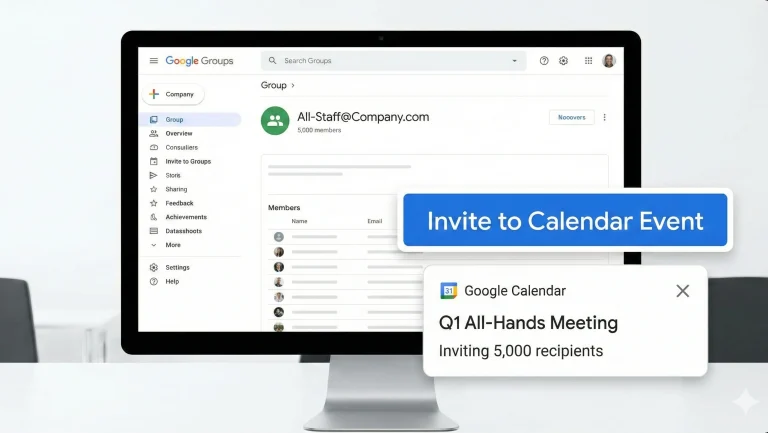
The steps:
- Create a group in Google Groups and add all members.
- Open Google Calendar and create your event.
- In the “Add Guests” field, type the group’s email address.
- Important: Click the arrow next to the group name to see if you want to expand the list or keep it as one entry.
Pros:
- This feature is capable of supporting from 200 to 500 emails, making it ideal for small corporate town halls, global webinars, major public events, and educational seminars.
- The list automatically updates if people join or leave the group.
- Can be Useful when working with an internal team.
- The process can be very easy if someone has already created a Google Group.
Cons:
- Every guest can see other guests’ email addresses, exposing privacy not suitable for public events.
- Can’t send calendar invite to external guests.
- Can’t add or remove members according to event requirements.
- Need to create many groups for each event.
- Increases hassle for creating, maintaining, and updating Google groups.
- You require Admin-level permissions for “View Members” permission,
B. Google Calendar API (Required Technical Skills):
The Google Calendar API lets developers write a computer program that connects to Google Calendar. Using this program, they can send about 200 to 500 calendar invitations per day.
This method needs coding skills and is meant for people who know how to work with programming tools. For most users, it can be hard to set up and use, so it is mainly recommended for technical professionals.
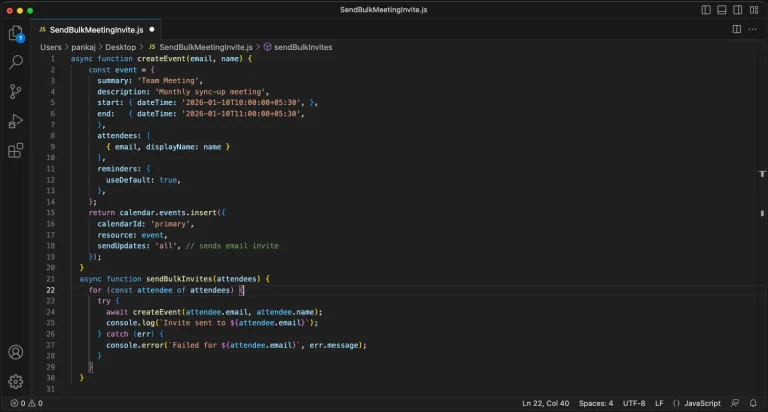
The Steps:
- Use the Events: insert method and define the attendees array in your JSON payload.
- Set sendUpdates to “all” to ensure emails are sent.
Pros:
- This method offers total control over the process.
- You can send invitations programmatically with more control.
- Good method for people who are familiar with working around APIs.
Cons:
- This method requires coding knowledge.
- No personalization in the calendar
- Bulk invitations are constrained by the service’s current API quota limits.
- NOT suitable for large events.
Google or Gmail may flag you as a spammer and block you over time.
C.The "Smart Spreadsheet" Method (Google Sheets + Apps Script)
This method works by linking Google Sheets with Google Apps Script. Google Sheets is used to store the list of names and email addresses, just like a simple table.
Google Apps Script is then used to read this data from the sheet. To do this, you must write a small program (code) that tells the system where the names and emails are stored and what to do with them.
Once the code is written correctly, it goes through each row in the spreadsheet and automatically sends a meeting invitation to every email address listed. While this can save time later, setting it up requires coding skills, careful testing, and patience to fix errors if something goes wrong.
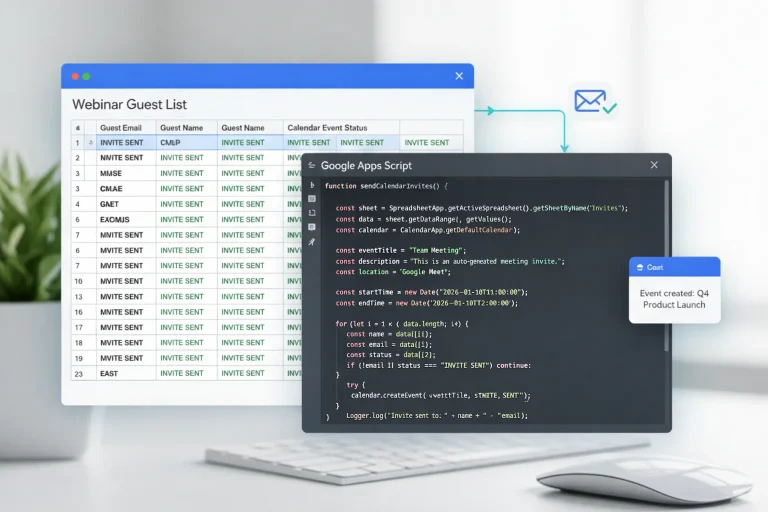
How it works: You list your guests in a Google Sheet and run a script to “blast” the invites using your google calendar account
The Steps:
- Open a Google Sheet and list emails in Column A.
- Go to Extensions > Apps Script.
- Paste a simple “CalendarApp” script (available in most online dev forums).
- Run the script to send bulk meeting invite requests to the entire list instantly.
Pros:
- The service is completely free.
- Effortlessly manages hundreds of invitations in a matter of seconds.
- The process becomes fast if you already have a spreadsheet ready.
Cons:
- The process requires deep knowledge of App Script programming.
- Every guest can see other guests email exposing privacy not suitable for public events.
- No personalization in the calendar.
- It can trigger spam filters if sent to external groups.
2. Microsoft Outlook
Outlook is often the first tool people use to send bulk meeting invitations. However, its interface can feel confusing at first, especially for new users. It is mostly used in corporate offices, where people are already familiar with how Outlook works.
Below are the different ways to send bulk meeting invitations using Microsoft Outlook:
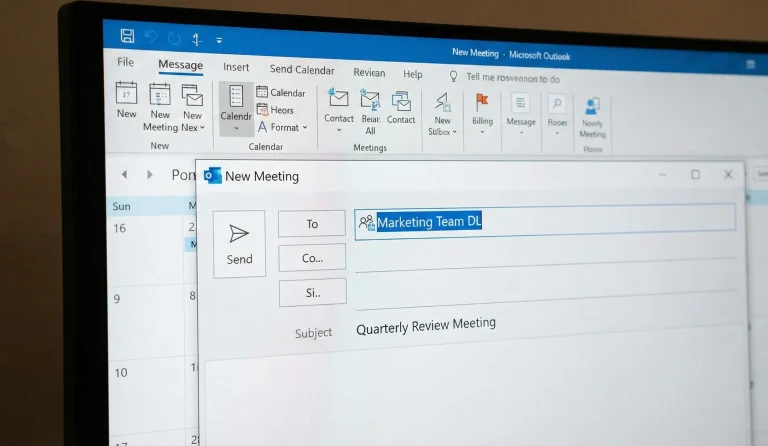
A. Using Distribution Lists / Contact Groups:
Using Distribution Lists or Contact Groups is a quick way to invite many people to a meeting at the same time. Instead of typing every email address, you just use one group name. This saves time and helps you avoid mistakes. It is very useful for office teams that meet every week. But this method also has some limits, which you should know before using it.
The Steps:
- Go to People > New Contact Group.
- Add members from your address book or a file.
- Create a new meeting and enter the Group Name in the “To” field.
Pros:
- Meeting invitations typically have high deliverability within the same company.
- Easy to reuse for weekly meetings.
- Good for people who are used to work around Microsoft office products.
Cons:
- No personalization in the calendar.
- Uncontrolled “Reply All” storms in email can quickly become a nightmare.
- It can be difficult to manage for external recipients.
- Outlook has a complex user interface, which can be confusing.
- Other attendees can view the names of all the guests.
B. Using Mail Merge (Word + Outlook):
While Microsoft Outlook is the undisputed king of corporate communication, anyone who has tried to invite 50+ people to a single event knows the interface can be a minefield. Most users stick to the standard “Contact Group,” but that often leads to messy “Reply All” chains and a total lack of privacy. This method offers some relief from those issues. It includes the combined use of Microsoft Word and Outlook.
The Steps:
- Open a new email or meeting invite and click the New Meeting Poll button in the ribbon.
- Select several time slots from your calendar that you are willing to host.
- Enter your list of recipients and send the poll.
- Once a consensus is reached, the poll can automatically send a final calendar invite to all participants.
Pros:
- Let recipients choose the meeting time instead of forcing one.
- Automatically holds your calendar to prevent double-booking during voting.
- Delivers the final invite once the preferred time is selected.
- Similar to the Google spreadsheet method.
Cons:
- External users often struggle with logging in and a poor voting experience.
- With 50+ attendees, agreeing on a time is nearly impossible.
- Limited customization makes these polls unsuitable for crucial corporate needs.
- Both parties receive excessive automated change-notification emails.
- Compatible calendar systems are rarely used in large, diverse lists.
3. Apple iCal
Apple Calendar makes it easy to send bulk meeting invites from Macbook or iPhone. Apple is well known for its efficient ecosystem. This seamless integration makes data transfer between devices a lot easier. While Apple has a great ecosystem, its interface requires time to get used to. Its UI is more focused on visual experience than productivity.
Apple Calendar is simpler and more consumer-focused, but it can still handle bulk requests for Mac and iPhone users.
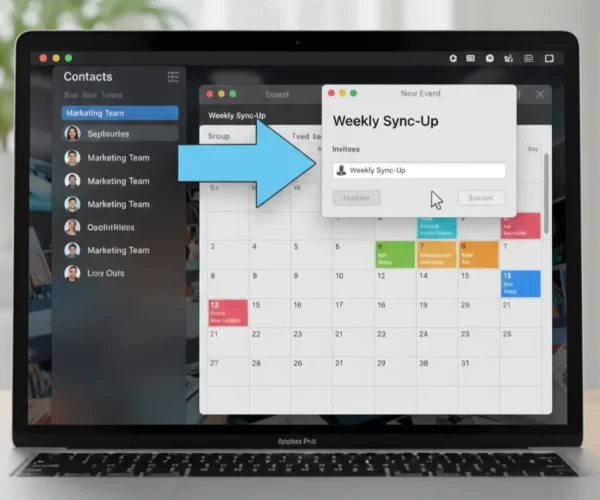
This method is based on Apple’s well integrated applications. Guests are added to the iCal console through the contacts app. The required contacts are dragged to the iCal, then invites are sent by creating a new event in it. This method works perfectly with other Apple apps, but might face issues when used with another operating system.
The Steps:
- Open the Contacts app and create a “New Group.”
- Drag the desired contacts into this group.
- Open iCal, create an event, and type the Group Name into the “Invitees” field.
Cons:
- No built-in way to hide the guest list.
- No personalization in the calendar.
- Limited to about 100 guests before performance lags.
- Doesn’t support connectivity with non-Apple devices.
- Guest are able to see other attendees names.
4. The "Calendar Link" Strategy (Best for Self-Scheduling)
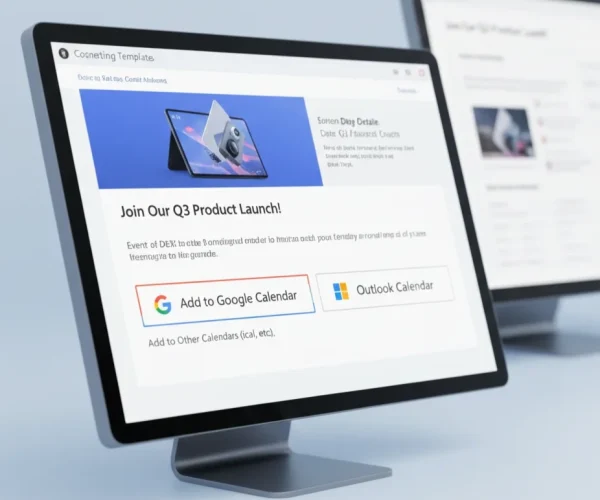
Instead of you pushing an invite to them, you let them pull it to their own calendar. This is one of the easiest way to send bulk meeting invites for webinars or public events. Interested people can add this link to their schedule if they are interested in your activity. While this gives an option to the guest, it defeats the main purpose of sending bulk invites. This option is used when the user wants their attendees to make the decision.
The Steps:
- Enter your event details into a calendar link generator.
- It creates a link (e.g., “Add to Google”, “Add to Outlook”).
- Paste this link into a bulk email or social post.
Pros:
- This approach carries zero risk of being marked as spam.
- Guests have the option to add the event to their own calendars.
- Best for sharing the invitation in a small group of people.
- A single link can be shared with all the guests.
Cons:
- You won’t know who added the meeting invite until they actually show up.
- The process requires the user to take action.
- Attendance is optional, dependent on the recipient’s preference.
- The meeting doesn’t automatically add to the user’s schedule.
- This method lacks personalization due to a single sharable links.
5. The CRM Automation Way (HubSpot, Salesforce, or Mailchimp)
If you already use a CRM, you can send bulk meeting invites using your existing database. This method is specifically for users who are already familiar with CRM and want to use it for sending meeting invites. Each CRM platform has a different interface, so these steps need to be modified according to the particular platform. The initial steps can be tiring, but the process gets automated once the system is fully setup.

How it works: Use “Workflows” or “Automations” to trigger a calendar event.
The Steps:
- Create a “Segment” of the people you want to invite.
- Set a workflow trigger to “Send Calendar Invite.”
- The CRM uses its official API to send bulk meeting invites to that specific segment.
Pros:
- The meeting invites should be highly personalized.
- The feature syncs with your sales data.
- Specifically for professionals who are familiar with CRM systems.
- It can be easy if someone already knows CRM software.
Cons:
- It can be a very expensive option if you do not already pay for a CRM system.
- This setup is complex for beginners.
- Steps may change based on the used platform.
- Doesn’t provide content personalization.
- Initial setup can be quite time consuming.
The Easiest Way - BulkCalendar
To bypass these limits, you need a purpose-built tool like BulkCalendar. It serves as a link between your spreadsheet and attendees’ calendars. This ensures every invite reaches them without risking their privacy.
BulkCalendar is the most professional, time-saving, and effective way to send bulk meeting invites in 2026. It clears away the tech issues of guest limits and privacy leaks. This lets you focus on your event instead of worrying about manual data entry.
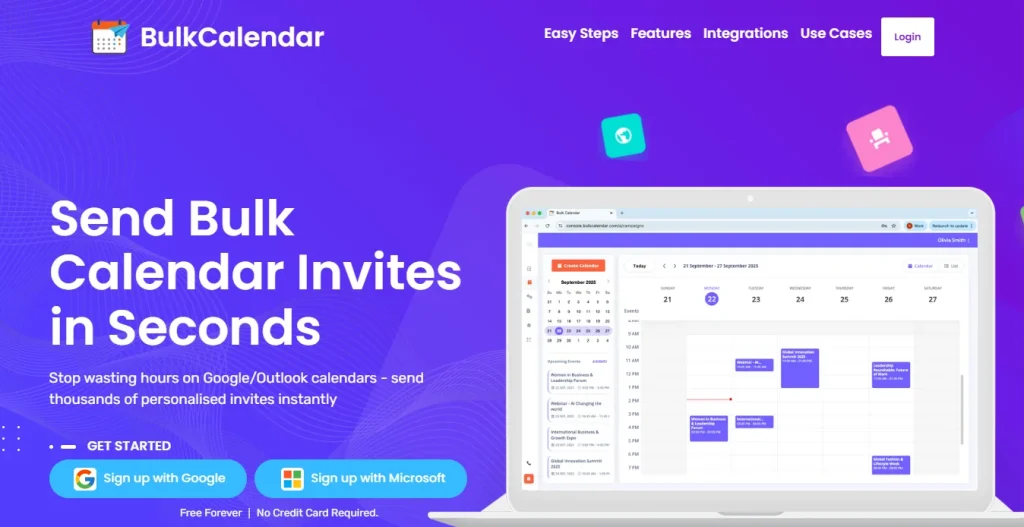
3 Easy Steps
Save hours of manual work – in just 3 simple steps, you can personalize every invite and send bulk meeting invites directly from your own email and domain
Create Calendar
Add a Personal Touch, Use First Names or Any Data You Choose
Import Guests
Copy-paste thousands of emails, or upload a CSV or Excel file
Send
Send securely from your own email or domain
Purpose-Built Tool That Saves You Hours
BulkCalendar makes sending, personalizing, and managing large calendar invites effortless - so you can focus on running your events, not fighting your calendar.
Mass Invites in Seconds
Send thousands of invites at once without guest limits or repetitive clicks.
Personalized for Every Guest
Add names, custom notes, and details so every invite feels personal and engaging.
Works with Every Calendar
Send calendar invites that work seamlessly across all major apps - Google, Outlook, Apple, Yahoo, and more. So your attendees never miss an event.




Conclusion
Manual scheduling is a productivity killer. Whether you are dealing with Google’s guest limits or Outlook’s privacy risks, there is a better way to manage your time and your guests.
The Bottom Line: Your Time is Too Valuable for Manual Entry. Scheduling shouldn’t be the hardest part of your job. If you’re primarily looking to send bulk calendar invites easily, you can follow our dedicated step-by-step guide here. With the right 3-step process, you can reach thousands of guests securely and personally.
Ready to see it in action? Join thousands of professionals who have simplified their scheduling. [Try BulkCalendar for Free Now]
Free Forever | No Credit Card Required