
Send Mass Meeting Invites in Outlook and O365 - Simple Steps
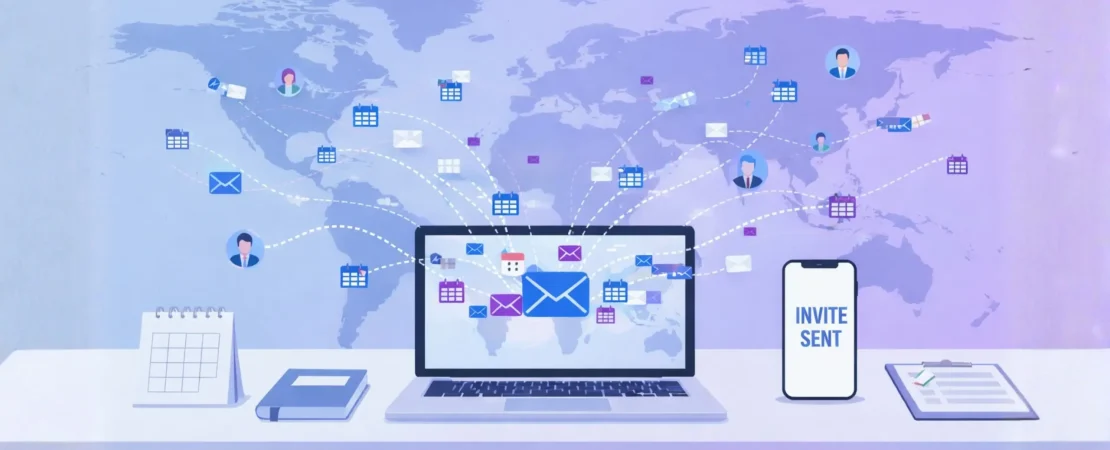
Are you trying to send mass meeting invites in outlook for webinars, training sessions, or team meetings? If yes, you already know how slow it feels to add email addresses one by one. This takes time and becomes tiring very fast.
Many teams use Outlook and O365 every day for meetings. They often try to send mass meeting invite in o365 using basic tools. This may work for small groups. But when your guest list grows, this process becomes stressful.
This guide shows simple ways to send mass meeting invites in outlook and o365. You will see what people normally use, what works, and where problems start when meetings become large.
Using Outlook to Send Mass Meeting Invites
Outlook is a popular tool for emails and meetings. Many companies use O365 and Outlook to plan daily work and team calls.
For small meetings, Outlook works well. You can add a few guests and send invites quickly. Most users are comfortable with this.
But when meetings become large, like webinars or company-wide events, sending mass meeting invites in outlook and o365 becomes harder. These tools are not made for very big guest lists.
That is why many teams look for better ways to send mass meeting invite in o365. The right method can save time, reduce mistakes, and help make sure every guest gets the invite.
Common Ways to Use Outlook
Most people start with Outlook when they want to send mass meeting invite in o365. Since Outlook is part of O365, it feels like the natural place to begin.
Outlook works well for small teams. But as the number of guests grows, things slow down. Adding many emails, fixing mistakes, and managing replies takes more effort.
Many users also find Outlook confusing for large meetings. Too many steps and settings make it harder to manage big meeting lists.
Below are common ways people try to send mass meeting invites in outlook and o365, along with their real limits.
1. Using O365 Distribution Groups
In O365, some companies use Distribution Groups to send meeting invites to many people at once. Think of a Distribution Group like a “team email.” When you invite that one group email, the invite goes to everyone inside the group.
This method is mainly used to send mass meeting invite in o365 for internal company meetings. For example, HR teams, managers, or department heads invite a whole department using one group address. It saves time because you don’t have to type every email again and again.
But there is a big limitation. Normal employees usually cannot create or edit these groups. Only the company tech team or company administrators control them. So if someone joins or leaves the company, you often need help from the admin team to update the group. Also, Distribution Groups are not great for inviting outside guests, like customers or public webinar attendees.
The steps:
- Company administrators create a Distribution Group in the O365 admin.
- Team members are added by the admin team.
- Enter the group email in the meeting invite.
- Outlook sends invites to all group members.
Pros:
- Good for large internal company teams.
- Managed by company administrators for better control.
- High delivery for internal users.
Cons:
- Normal users cannot manage groups.
- Not useful for external guests.
- No meeting invite personalization.
- Group changes can take extra time.
2. Copying Emails from Excel into Outlook
Many people store email lists in Excel. So the easiest idea is to copy the list and paste it into the meeting invite. For small lists, this feels quick and simple. You can finish in minutes if you only have a few guests.
This method becomes risky when the list is big. Outlook can limit large guest lists. Sometimes, invites fail, emails are pasted incorrectly, or a few addresses get skipped. Then you have to double-check everything, which takes even more time.
There is also a privacy issue. In many cases, guests can see other guests’ email addresses. For internal teams, this may not matter. But for webinars, public events, or customer meetings, this can create serious privacy problems. That is why this method works only for small lists.
The steps:
- Open your Excel file with guest emails.
- Copy the full list of email addresses.
- Paste emails into the Outlook meeting guest field.
- Send the meeting invite to all guests.
Pros:
- No extra tools are required.
- Easy for very small email lists.
- Works if emails are already in Excel.
Cons:
- Outlook may block large guest lists.
- Easy to make copy-paste mistakes.
- Guest emails may be visible to others.
- Not suitable for large meetings.
3. Using Outlook Contact Groups
Contact Groups help you save many people under one group name. Instead of adding the same guests every time, you create the group once and reuse it. This is useful for weekly team meetings or regular internal calls.
This method feels simple because it is inside Outlook. You do not need extra tools. You just type the group name, and Outlook adds all members for you. For small teams, it saves time and reduces typing errors.
But Contact Groups become hard when the group is large or keeps changing. If people join or leave often, you must update the group again and again. Another big issue is email noise. Reply-all messages can create clutter and confusion. It is also not ideal for outside guests and does not allow personalization.
The Steps:
- Create a new Contact Group in Outlook.
- Add team members to the group.
- Create a new meeting in Outlook.
- Enter the group name as the guest.
Pros:
- Easy to repeat team meetings.
- Saves time typing email addresses.
- The group can be reused again.
Cons:
- Hard to manage large groups.
- Reply-all emails can cause issues.
- Not good for outside guests.
- No personalization in invites.
4. Using Mail Merge for Meeting Invitations
Mail Merge is a method where you use Word with Outlook to send meeting emails to many people. This method is often used by teams that want more control than simple Contact Groups.
Some people prefer this because it can help with privacy. Instead of one big group invite, messages feel more separate. It can also reduce some reply-all type problems.
But the setup is not easy for normal users. You need to understand Word, Mail Merge steps, and how it connects with Outlook. For large lists, it becomes slow and confusing. Even if emails go out, it is still not a smooth system for large meetings or events.
The Steps:
- Prepare a guest list in Microsoft Word.
- Connect Word with Outlook Mail Merge.
- Send meeting emails to all contacts.
- Track replies manually in Outlook.
Pros:
- Better privacy than Contact Groups.
- Slightly more control over emails.
- Can reduce reply-all problems.
Cons:
- The setup is confusing for most users.
- Not built for large meetings.
- Requires learning Word and Outlook together.
- Hard to manage at scale.
5. Using Shared Mailbox or Shared Calendar
Some teams use shared mailboxes or shared calendars to plan meetings. This is common in HR teams, training teams, and support teams. The benefit is that everything stays in one shared place, so the whole team can see and manage it.
This helps when multiple people manage the same meetings. One person can create the meeting, and another can update it later. This keeps internal coordination simple.
But for big guest lists, the main problem stays the same. You still add guest emails manually. Outlook guest limits still apply. Personalization is not possible. So it works for small internal use, but not for large public meetings.
The Steps:
- Open the shared mailbox or calendar.
- Create a new meeting from the shared account.
- Manually add all guest email addresses.
- Send the meeting invite from the shared account.
Pros:
- Useful for team-managed meetings.
- Keeps meetings in one shared place.
- Good for internal coordination.
Cons:
- Still requires manual email entry.
- Outlook guest limits still apply.
- No personalization options.
- Hard to scale for big lists.
6. Using Outlook Plugins for Group Meeting Invites
Outlook plugins (also called add-ins) are tools you install inside Outlook. These tools often say they can help you send meeting invites faster. Some plugins connect to Excel files or contact lists.
For small lists, plugins may save time. You can import contacts and reduce copy-paste work. This is why many people try plugins when manual work feels slow.
But plugins still follow Outlook rules. If Outlook has guest limits, plugins cannot fully remove them. Many plugins also require paid plans and setup. For large public events, plugins are usually not enough. They help a little, but they do not solve large-scale meeting invites.
The Steps:
- Install an Outlook plugin from the add-ins store.
- Connect your Excel or contact list.
- Create a meeting inside Outlook.
- Use a plugin to send meeting invites.
Pros:
- Reduces some copy-paste work.
- Works inside outlook interface.
- May support Excel contact imports.
Cons:
- Many plugins require paid plans.
- Setup can be confusing.
- Outlook limits still apply.
- Not ideal for large public meetings.
Why Outlook Is Not Built for Big Meetings
All these methods show that sending mass meeting invites in outlook and o365 is possible. But they also need a lot of manual work.
As your guest list grows, these methods become slower. If you want a complete walkthrough for managing large meeting invitations more efficiently, you can follow our step-by-step guide. You spend more time fixing errors, managing limits, and handling replies.
This is why many teams outgrow basic Outlook and O365 tools for large meetings. They need tools made for handling big meeting lists.
The Smartest Way - BulkCalendar
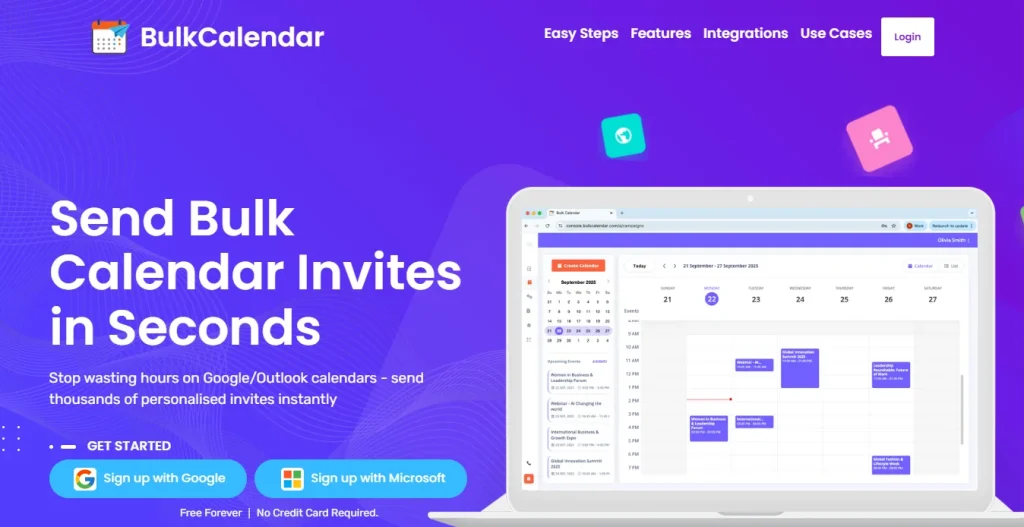
To bypass these limits, you need a purpose-built tool like BulkCalendar. It serves as a link between your spreadsheet and attendees’ calendars. This ensures every invite reaches them without risking their privacy.
BulkCalendar is the most professional, time-saving, and effective way to send mass meeting invites in 2026. It clears away the tech issues of guest limits and privacy leaks. This lets you focus on your event instead of worrying about manual data entry.
3 Easy Steps
Save hours of manual work – in just 3 simple steps, you can personalize every invite and send bulk meeting invites directly from your own email and domain
Create Calendar
Add a Personal Touch, Use First Names or Any Data You Choose
Import Guests
Copy-paste thousands of emails, or upload a CSV or Excel file
Send
Send securely from your own email or domain
Purpose-Built Tool That Saves You Hours
BulkCalendar makes sending, personalizing, and managing large calendar invites effortless - so you can focus on running your events, not fighting your calendar.
Mass Invites in Seconds
Send thousands of invites at once without guest limits or repetitive clicks.
Personalized for Every Guest
Add names, custom notes, and details so every invite feels personal and engaging.
Works with Every Calendar
Send calendar invites that work seamlessly across all major apps - Google, Outlook, Apple, Yahoo, and more. So your attendees never miss an event.



Conclusion
Manual scheduling takes a lot of time. Sending meeting invites one by one in Outlook makes large meetings hard to manage.
When guest lists grow, mistakes, delays, and limits become common. This makes planning events more stressful than they should be.
The message is simple. Your time is important. Scheduling should be easy, not tiring. With the right system, you can invite hundreds or thousands of people with a simple process.
Want to see how it works? Join many professionals who have made mass meeting invites in Outlook simple and fast.
Free Forever | No Credit Card Required